Custom NFC, RFID and Smart Card Manufacturer
100M+ Cards Annually | Original NXP Chips | Since 2011
 2026.08.31


For years, barcodes and QR codes have been a common choice for event tickets.
They are simple, familiar and easy to print. But when thousands of people arrive at an event within a short period, organizers may face new challenges: slow scanning, damaged codes, phone battery issues, screen brightness problems and the need to repeatedly show a ticket at different checkpoints.
RFID provides another approach.
Instead of scanning a visible barcode, an RFID ticket can be identified wirelessly when it is presented near an RFID reader.
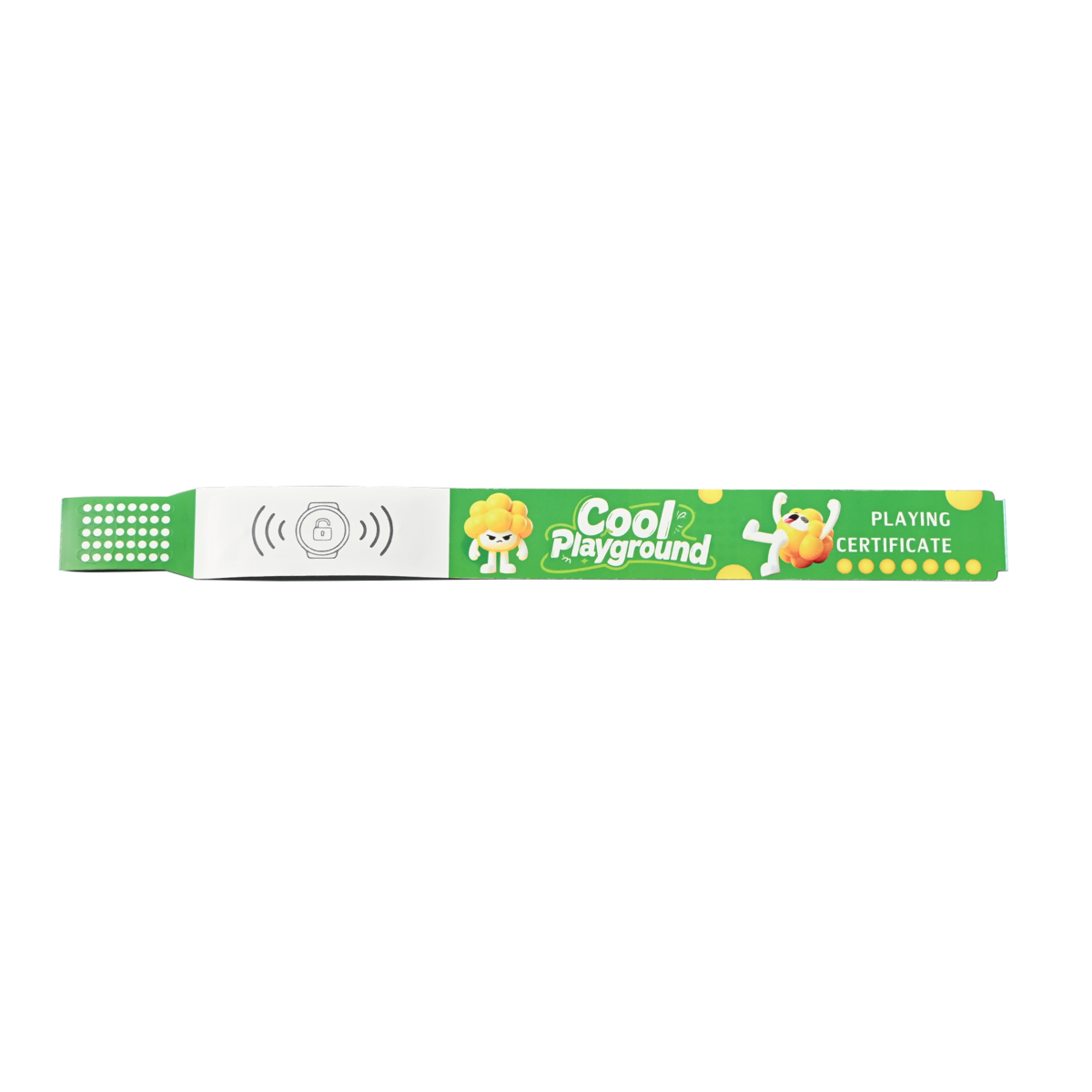
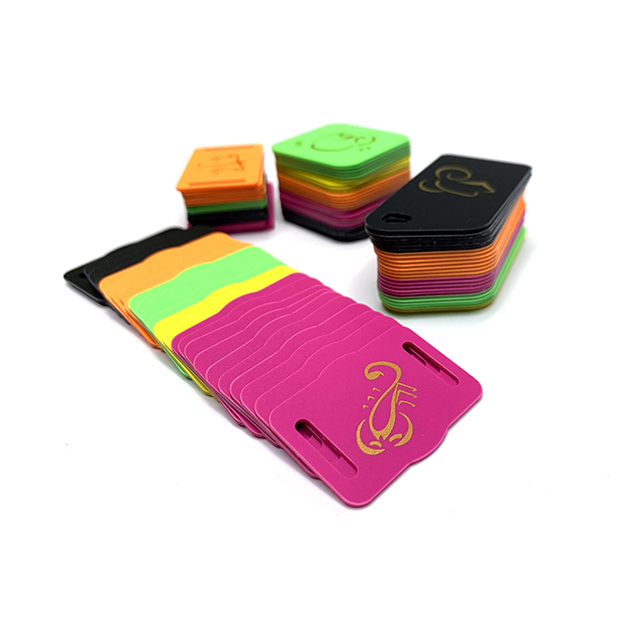
The physical ticket can be produced as a card, tag or wristband, allowing event organizers to select the format that best fits their event.
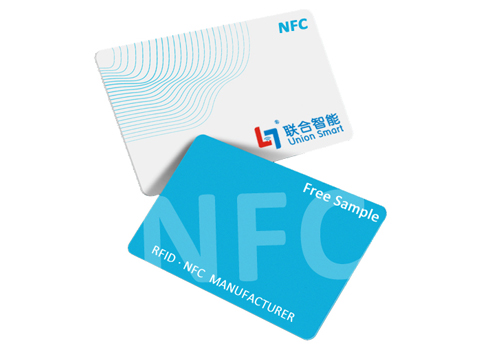
Union Smart provides customized RFID/NFC cards, tags and wristbands for event ticketing, access control and entertainment applications.
 |  |  |
 |  |  |
A typical barcode or QR-code ticket follows a simple process:
Ticket → Camera/Scanner → Barcode Recognition → System Verification → Entry
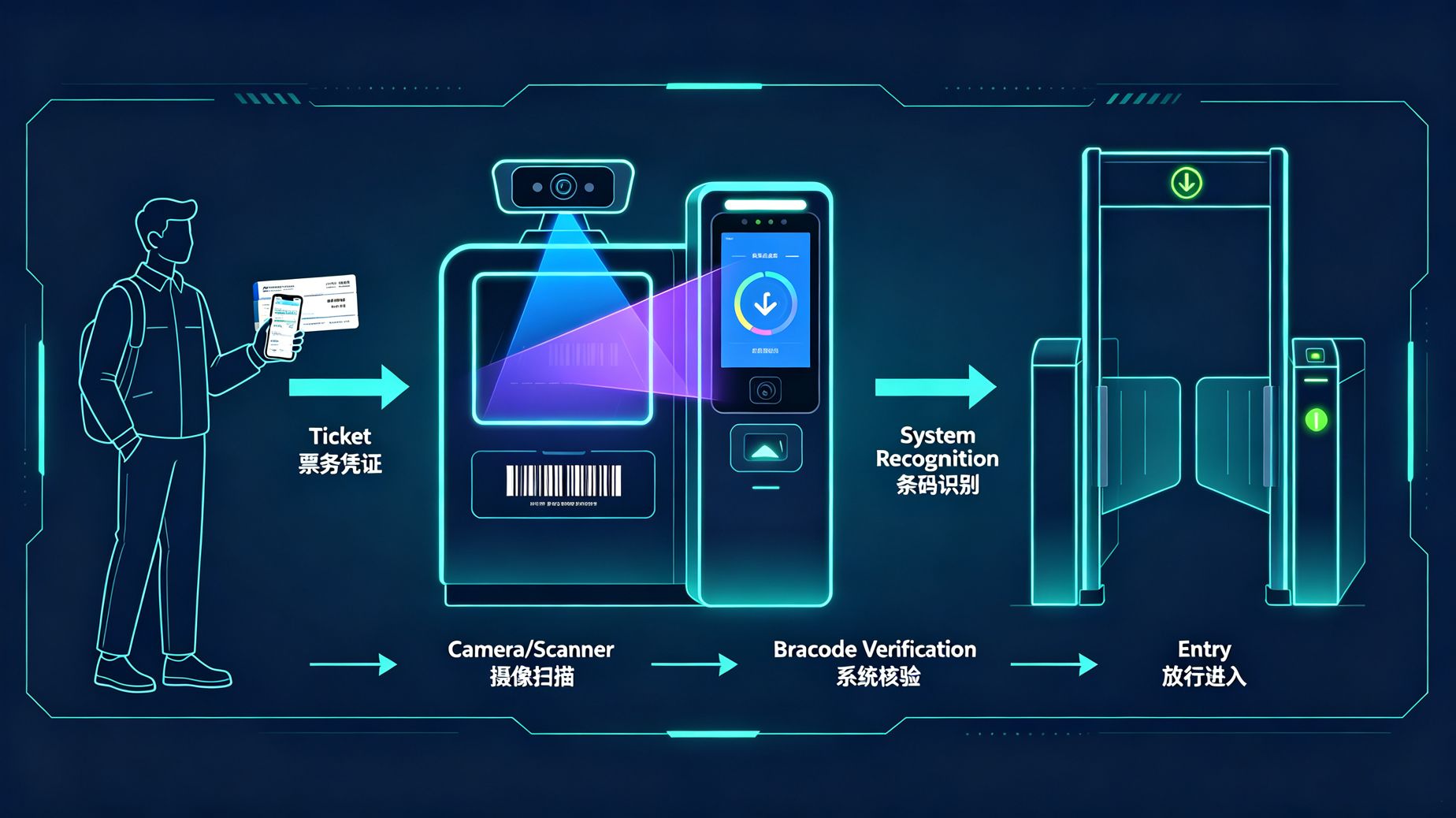
The attendee needs to present the barcode or QR code to the scanner.
For a mobile ticket, this usually means:
Open the ticket on a smartphone.
Display the barcode or QR code.
Position the code in front of the scanner.
Wait for the scanner to recognize the code.
Complete the verification process.
This works well for many events, but the experience can become less convenient when there are large crowds or multiple access checkpoints.
With RFID ticketing, the visible barcode is no longer the only way to identify the attendee.
An RFID chip is integrated into the physical ticket.
The process becomes:
RFID Ticket → RFID Reader → Ticket ID → System Verification → Entry
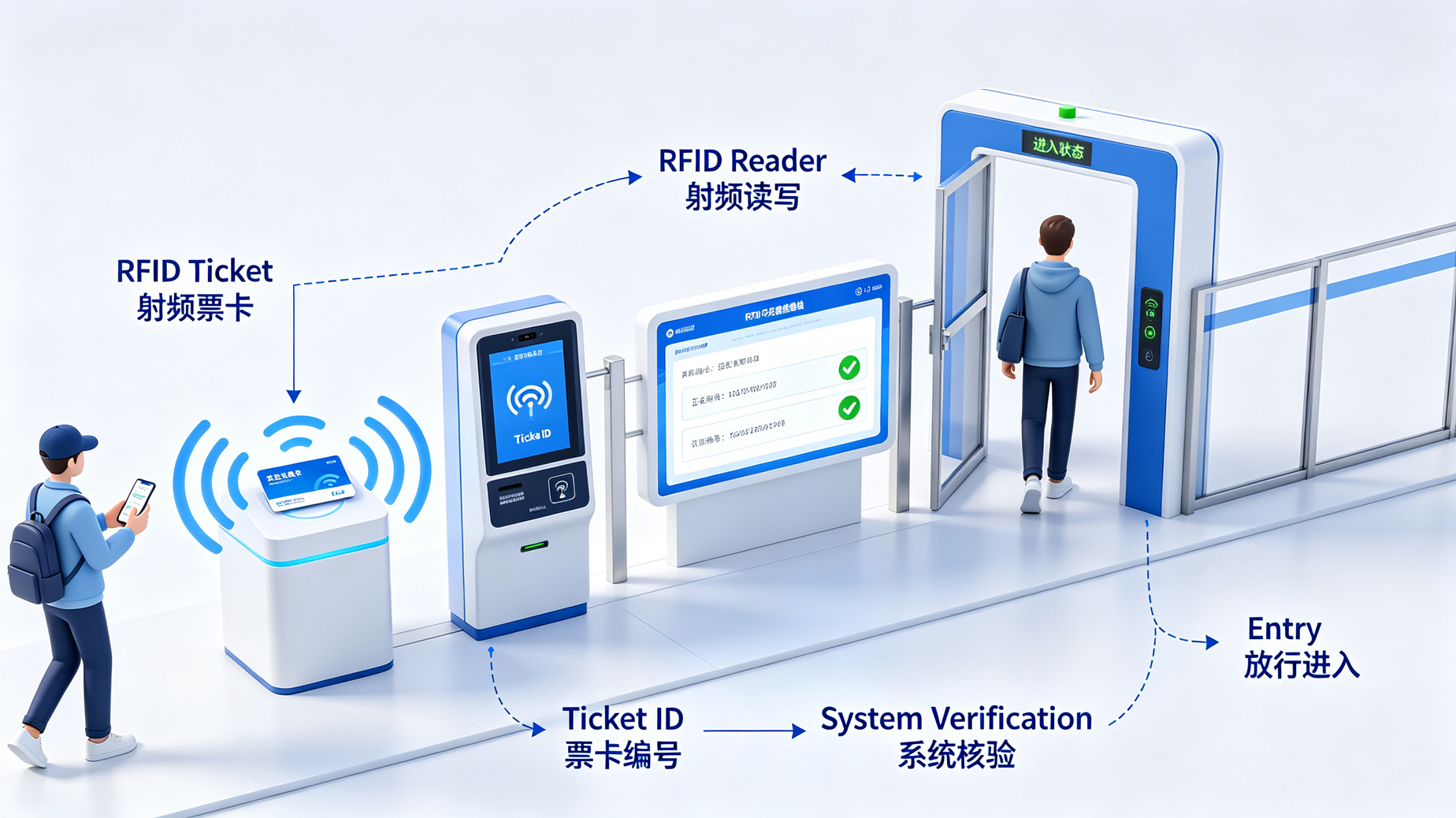
The attendee presents the RFID card, tag or wristband near the reader.
The reader detects the RFID credential and sends its identification information to the event management system.
The system then checks the ticket status and access permission.
The interaction can be as simple as:
Present → Identify → Verify → Enter
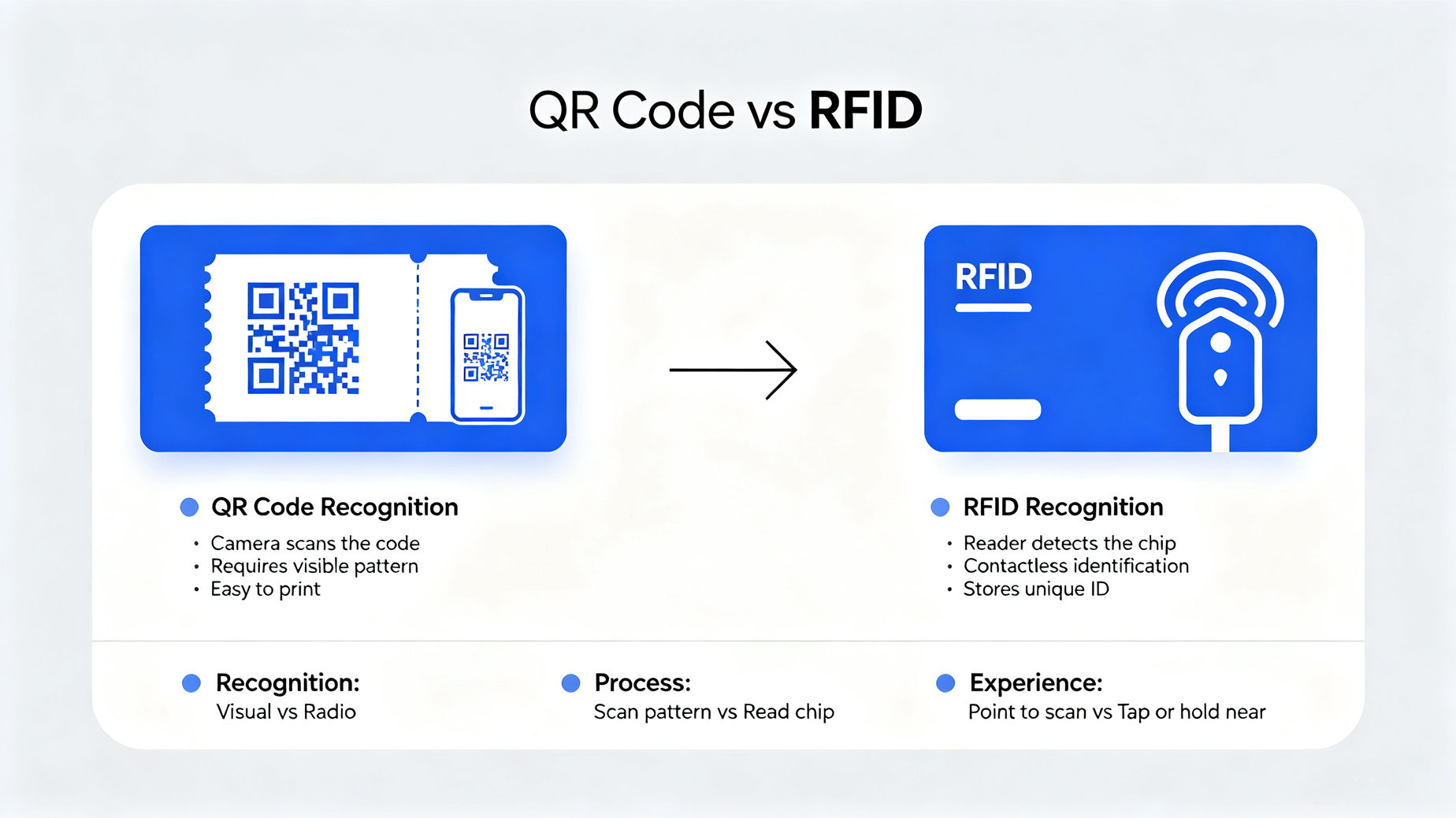
The goal is not simply to replace a barcode with an RFID chip.
The bigger opportunity is to change the physical event ticket into a reusable or wearable digital credential.
RFID credentials are identified wirelessly, so attendees do not need to position a printed barcode or QR code directly in front of a camera.
The RFID reader can identify the credential when it is presented within the reader's operating range.
RFID technology can be integrated into:
Cards
Tags
Wristbands
This gives organizers more flexibility when designing the event experience.
The RFID identifier can be associated with different permissions in the event management system.
For example:
General Ticket → General Area
VIP Ticket → VIP Area
Staff Credential → Staff Area
When integrated with the appropriate system, an RFID credential can potentially be used beyond the entrance.
For example:
Entry → Access Control → Locker → Event Services
The exact functions depend on the event system and reader infrastructure.
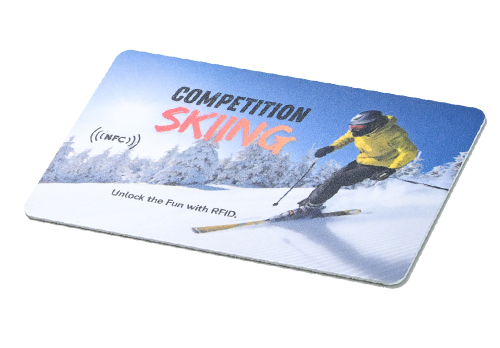
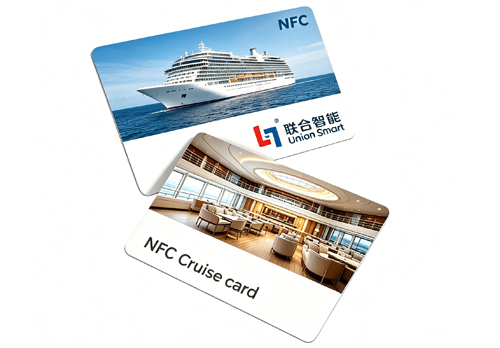
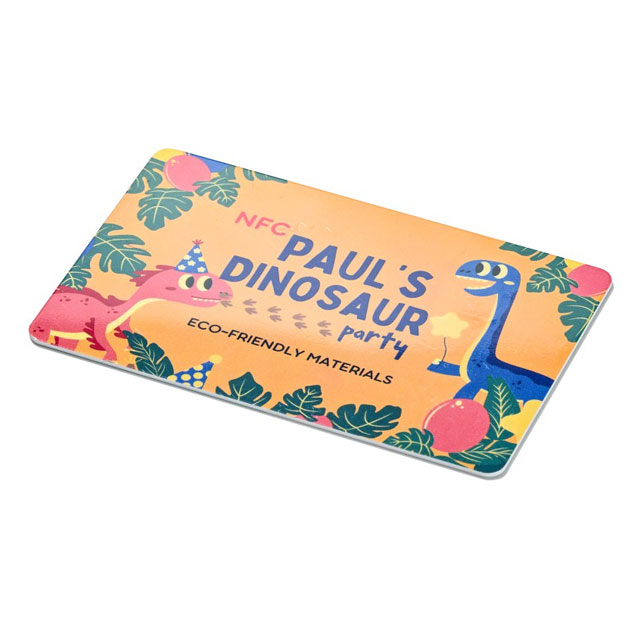
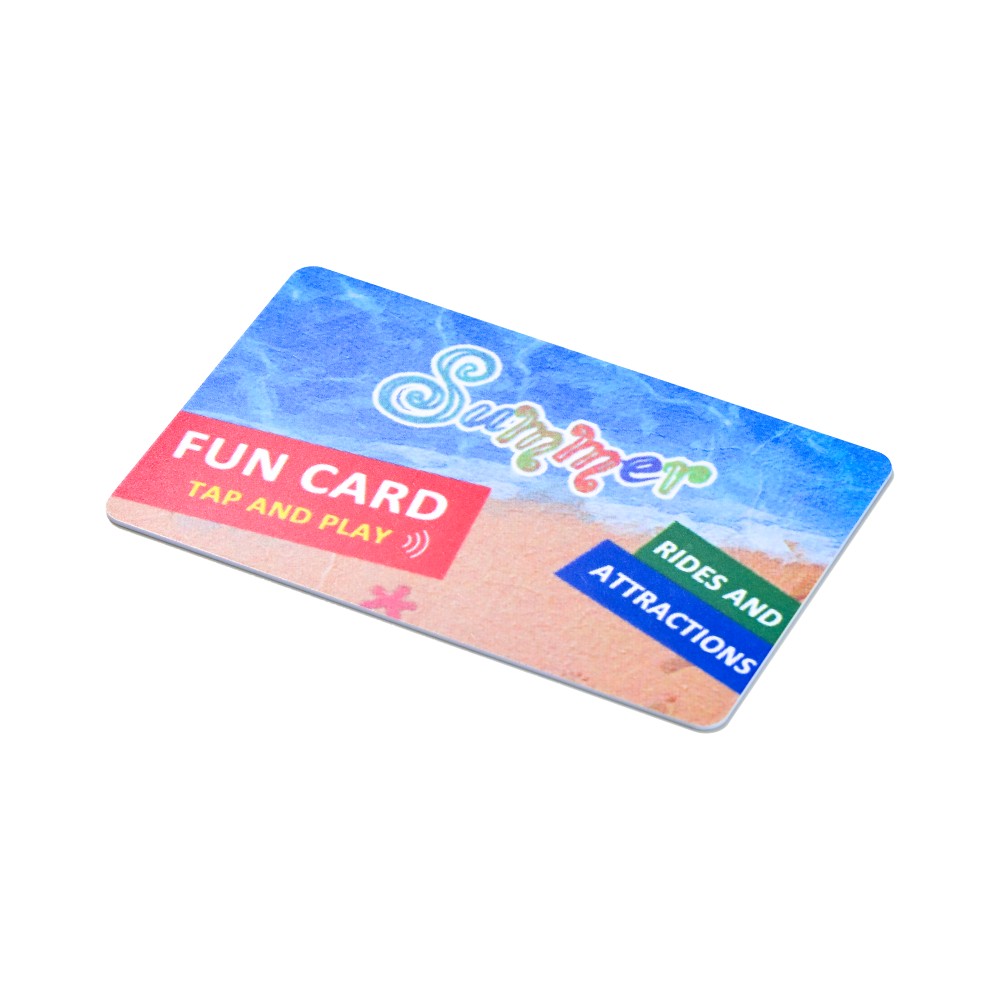
For conferences, exhibitions, concerts and VIP events, an RFID card provides a durable physical credential with plenty of space for event branding.
The card can include:
Event artwork
Logo
Serial number
QR code
RFID chip
Variable information
It can also be designed as a collectible event card when the physical ticket is intended to be retained.
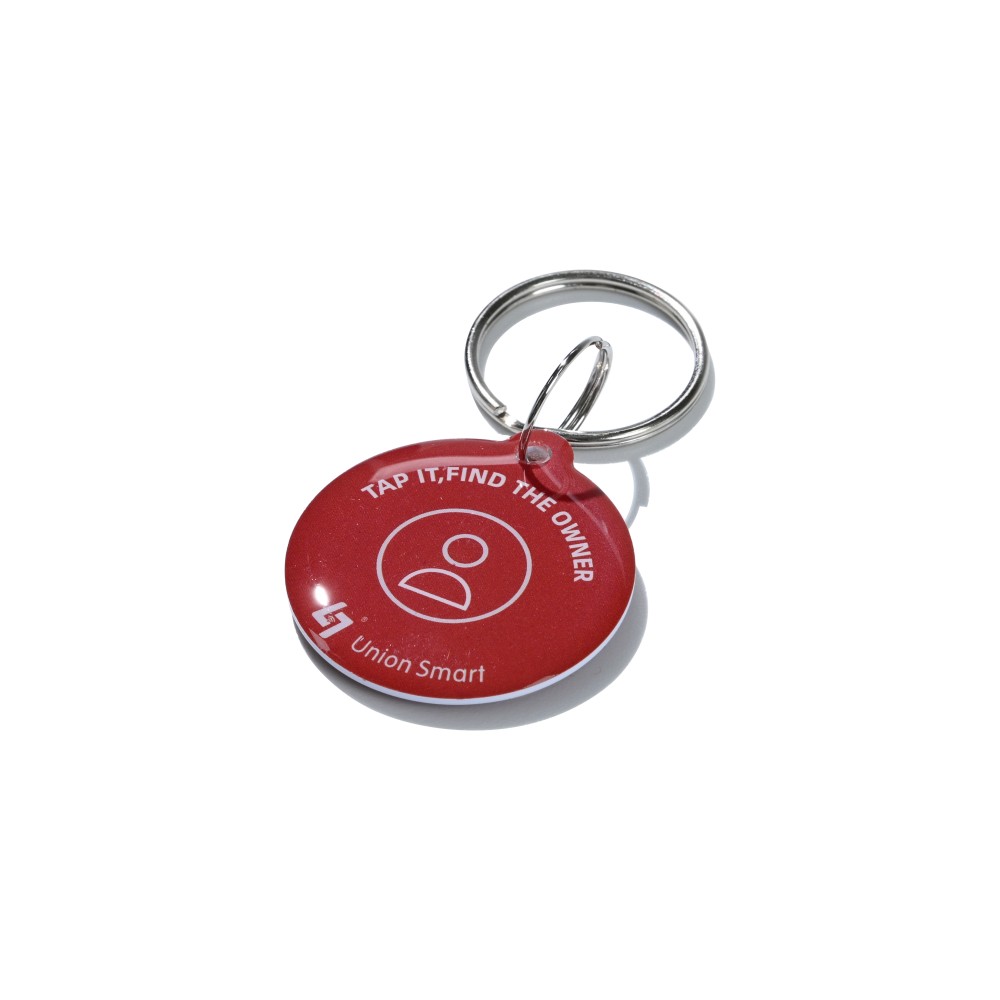
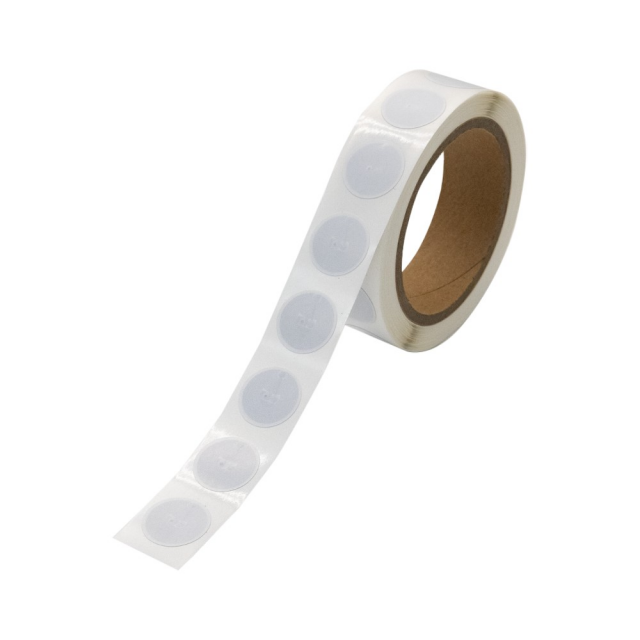
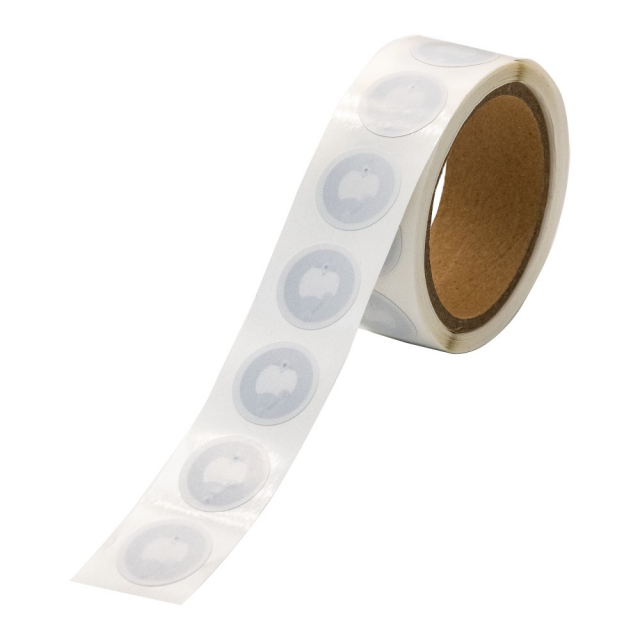
For short-term events or temporary passes, RFID tags provide a lightweight and flexible alternative.
They can be customized in different sizes and shapes and can be supplied with adhesive backing or integrated into other event materials.
Typical applications include:
Visitor passes
Exhibition badges
Temporary tickets
Event identification
Promotional activities
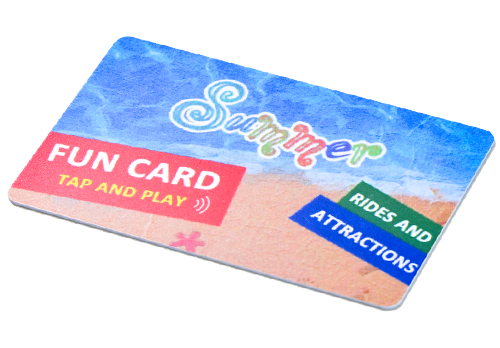
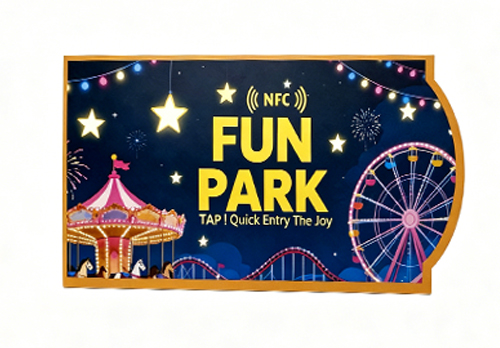
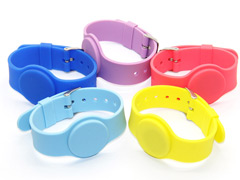
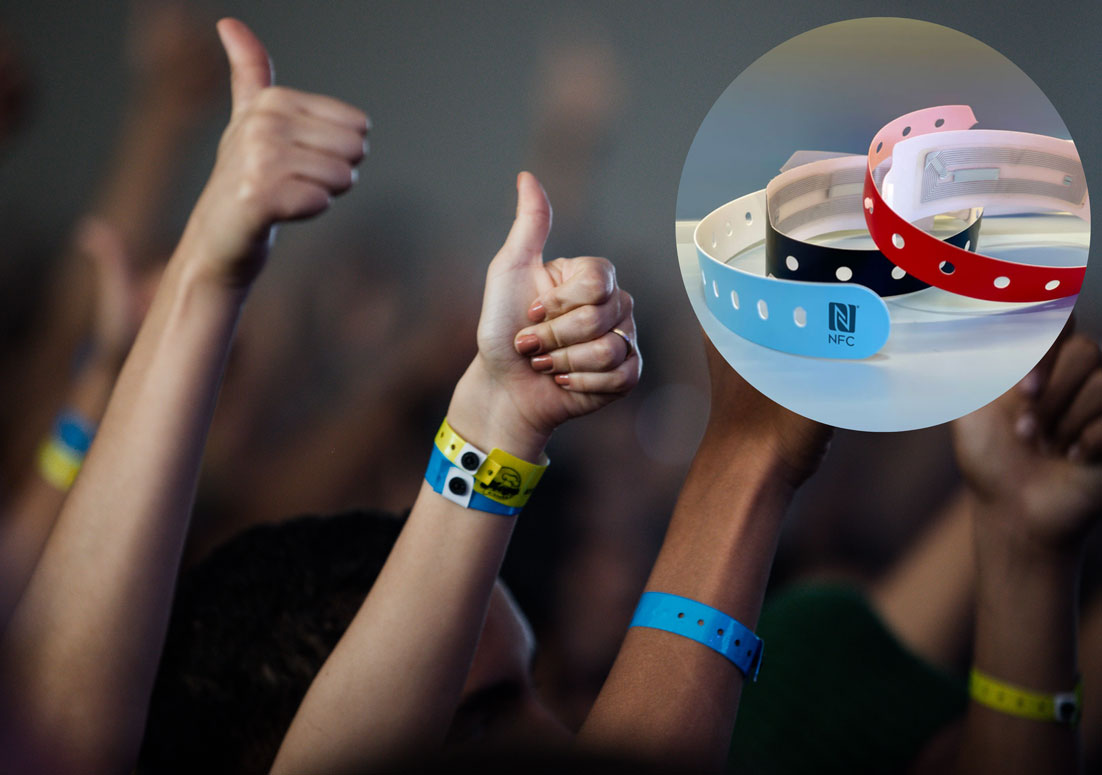
For festivals, theme parks, waterparks and multi-day events, an RFID wristband can turn the ticket into a wearable credential.
Instead of carrying a paper ticket or repeatedly opening a mobile ticket, the attendee simply keeps the wristband on.
Typical applications include:
Music festivals
Concerts
Waterparks
Theme parks
Sports events
Resorts
Multi-day events
A Simple Comparison
| Feature | Barcode / QR Ticket | RFID Ticket |
| Identification method | Optical scanning | Radio-frequency identification |
| Direct line of sight | Usually required | Not required in the same way |
| Physical format | Paper, phone screen, card | Card, tag, wristband |
| Wearable option | Limited | Yes |
| Contactless identification | Limited | Yes |
| Access-level management | System dependent | System dependent |
| Custom physical design | Yes | Yes |
| Suitable for wristbands | Less common | Common |
RFID does not automatically make every event faster or better. The actual performance depends on the reader system, ticket design, software and event infrastructure.
The advantage is that RFID provides another physical identification method that can be integrated into a broader event management system.
Consider a music festival.
With a traditional mobile QR ticket:
Buy Ticket → Receive QR Code → Open Phone → Scan at Entrance
With an RFID wristband:
Register → Receive Wristband → Wear It → Present Wristband → Enter
The difference becomes even more useful when the attendee needs to pass through several areas during the event.
Instead of repeatedly opening a ticket, the attendee can carry one RFID credential throughout the event.
RFID event credentials can be used in:
Concerts
Music festivals
Live performances
Entertainment venues
Trade shows
Exhibitions
Conferences
Product launches
Visitor management
Stadium entry
Sports competitions
Race events
VIP access
Staff identification
Theme parks
Waterparks
Resorts
Family entertainment centers
The physical ticket is often part of the event's branding.
Union Smart provides OEM/ODM customization for RFID event cards, tags and wristbands.
Customization options include:
RFID/NFC chip selection
Card material
Tag material
Wristband material
Product dimensions
Custom shapes
Full-color printing
Logo printing
Serial numbers
QR codes
UID encoding
Data encoding
Variable data
Adhesive backing
Custom packaging
The RFID solution can be developed according to the event's reader, software system, operating environment and ticket lifecycle.
Replacing a barcode with RFID is only one part of an event ticketing project.
A complete solution usually includes:
RFID Credential + RFID Reader + Event Management System + Access Control
The RFID credential identifies the attendee.
The reader captures the credential information.
The software verifies the ticket and access permissions.
The access system determines what happens next.
This means RFID works as part of the overall event infrastructure rather than as a standalone technology.
The evolution from barcode to RFID is not simply a change in scanning technology.
It changes what an event ticket can be.
A traditional ticket primarily answers:
“Is this ticket valid?”
An RFID credential can become part of a broader system that answers:
“Who is this attendee?”
“What access level do they have?”
“Which areas can they enter?”
“What other event services are available to them?”
For event organizers looking beyond basic ticket scanning, RFID provides a flexible foundation for connecting physical credentials with digital event management.

Union Smart is an RFID/NFC card, tag and wristband manufacturer providing OEM/ODM manufacturing services for event ticketing, access control and entertainment applications.
From chip selection and product design to encoding and mass production, Union Smart can support customized RFID event credential projects.
Typical production workflow:
Project Requirements → RFID Solution → Product Design → Sampling → Encoding → Mass Production → Quality Inspection → Packaging
Whether the project requires a branded RFID card, a lightweight RFID tag or a wearable RFID wristband, the product can be customized according to the event's requirements.