Custom NFC, RFID and Smart Card Manufacturer
100M+ Cards Annually | Original NXP Chips | Since 2011


 2026.06.18


The 2026 FIFA World Cup will expand to 48 teams and host 104 matches across the United States, Canada, and Mexico. As one of the largest global sporting events in history, the tournament faces a major challenge: how to manage massive cross-border crowds while ensuring security and operational efficiency.
RFID (Radio Frequency Identification) technology has become a core infrastructure in modern large-scale sports events. In particular, a hybrid system combining High Frequency (HF) and Ultra-High Frequency (UHF) is widely adopted for ticketing, access control, and logistics tracking.
RFID-based ticketing is now a standard solution in mega sporting events.
HF RFID is a short-range, high-security wireless identification technology used for secure access control and ticket validation.
It is commonly embedded in smart cards, wristbands, and mobile credentials.
Typical chips include:
NXP MIFARE DESFire
NTAG 424 DNA (secure NFC authentication)
Secure entry authentication
Anti-cloning protection
Dynamic encryption per scan (SUN technology)
HF RFID is mainly used for identity verification and fraud prevention.
UHF RFID is a long-range identification technology designed for multi-tag reading and large-area tracking.
It is widely used in stadium perimeters, logistics zones, and staff movement tracking.
Long-distance batch reading
Real-time crowd density analysis
Movement flow tracking
Entry/exit statistics monitoring
UHF RFID is mainly used for visibility and crowd management, not security authentication.
| Technology | Frequency | Main Role | Application |
|---|---|---|---|
| HF RFID | Short range | Security & authentication | Ticket validation, Fan ID |
| UHF RFID | Long range | Tracking & analytics | Crowd flow, logistics, staff movement |
Most modern stadium systems use a dual-layer architecture:
HF = security layer
UHF = operational intelligence layer
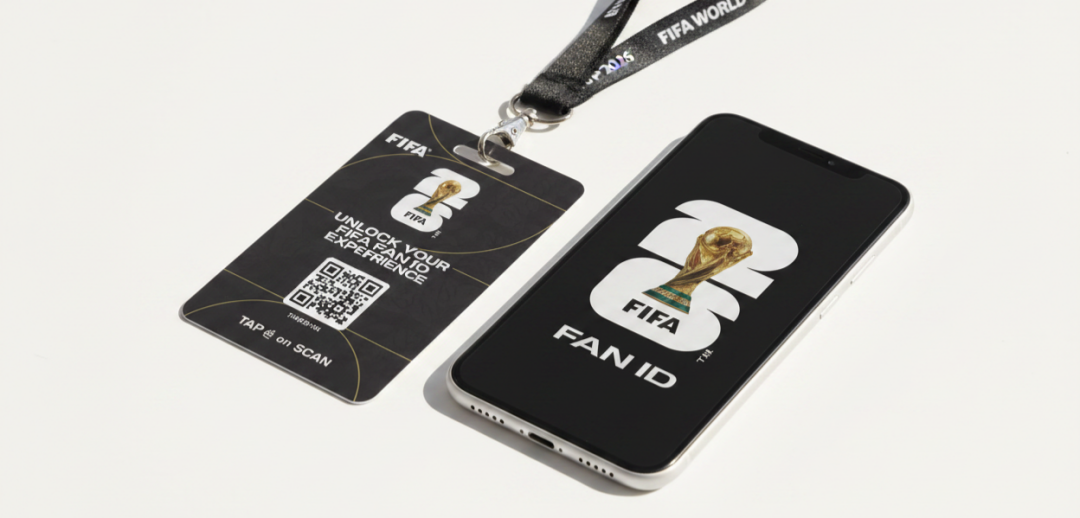
FIFA Fan ID systems are no longer just identification tools. They are evolving into digital engagement platforms.
HF NFC-enabled credentials allow fans to:
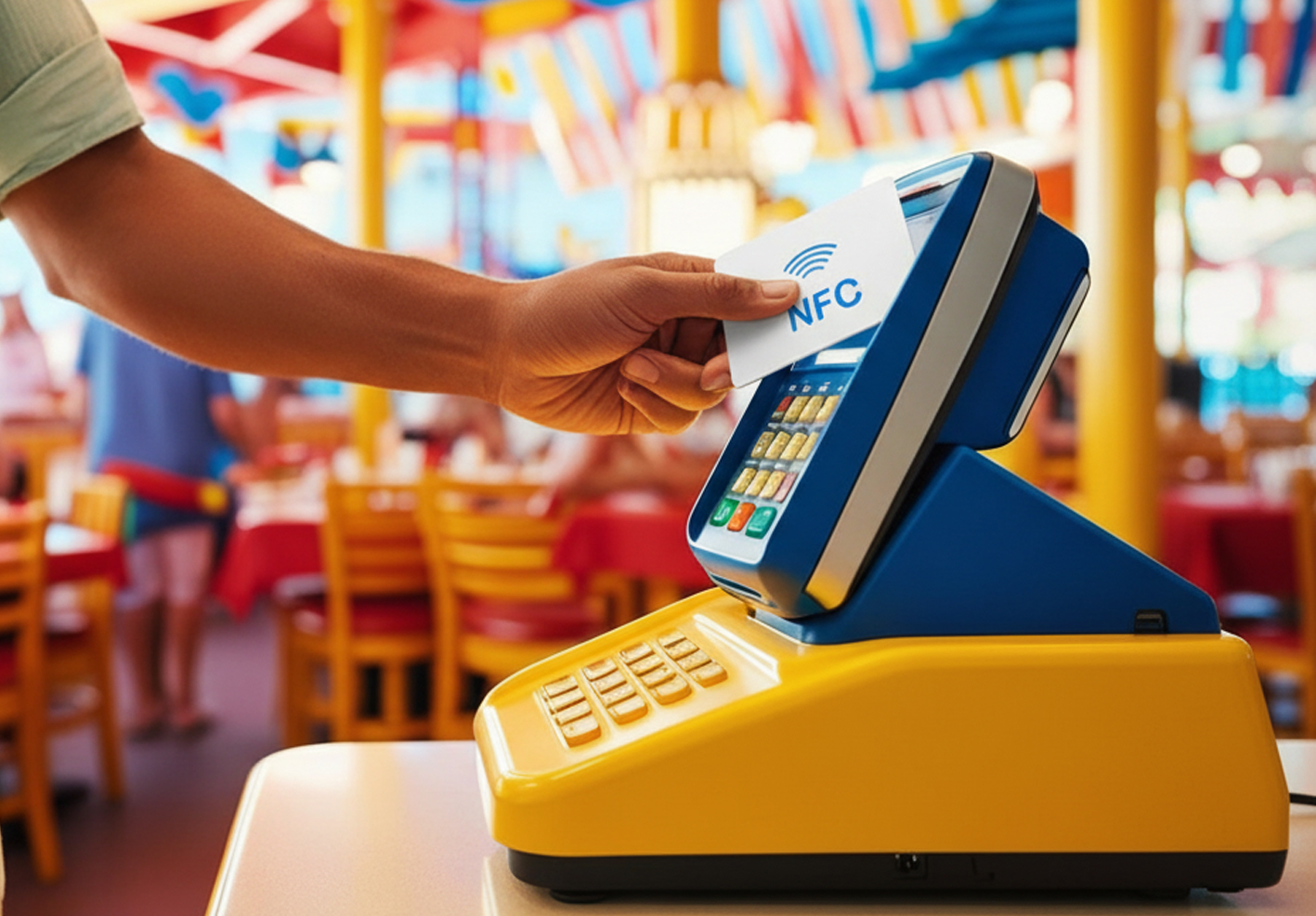
Tap smartphones for instant access
Avoid app downloads
Enter official digital ecosystems directly
AR content unlocking
Loyalty points systems
Personalized stadium navigation
Sponsored digital campaigns
This transforms physical credentials into a digital interaction gateway.
Large stadium operations require differentiated access control strategies.
UHF systems are used for:
Staff movement recording
Zone-based access analytics
Security audit and post-event review
HF RFID is used in:
Command centers
Control rooms
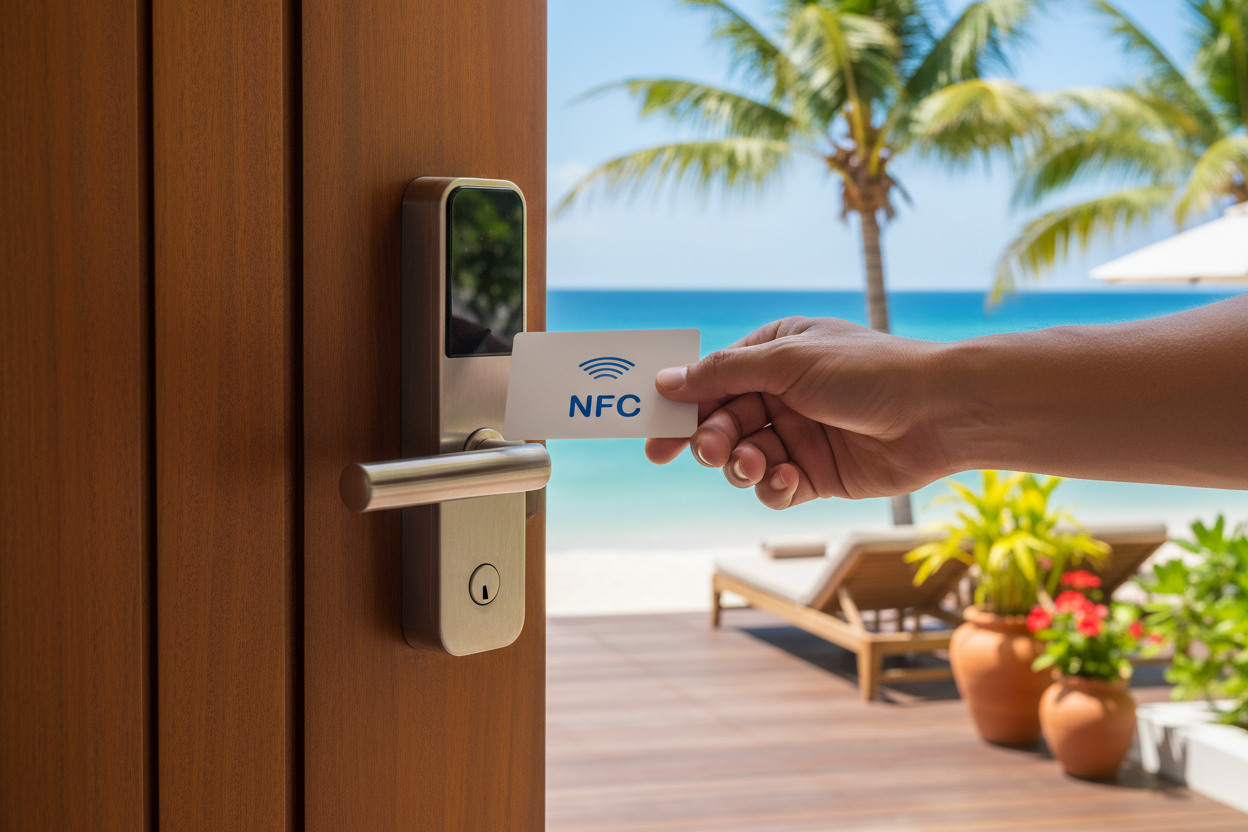
High-security operational areas
HF ensures precise access control where accuracy is critical.
RFID is also widely used in World Cup logistics operations.
Bulk scanning without unpacking
Real-time warehouse inventory visibility
Automated inbound/outbound tracking
Reduced manual errors
This enables full lifecycle visibility from production to stadium delivery.
The official 2026 World Cup match ball (“Trionda”) includes embedded sensor technology developed by FIFA and Kinexon.
However:
This system is NOT RFID.
It uses an IMU (Inertial Measurement Unit) sensor.
Tracks acceleration and rotation
Sends data up to 500 times per second
Supports VAR and Semi-Automated Offside Technology (SAOT)
Unlike RFID, IMU is used for motion tracking, not identification.
Some sports equipment may still use NFC chips for authentication or fan interaction, but this is separate from motion-sensing systems.
Deploying RFID systems in stadium environments presents multiple challenges:
Human body water absorption affecting signal stability
Metal structures causing RF reflection
Dual-frequency antenna interference (HF + UHF integration)
Mass production consistency requirements
These challenges require high-level industrial design and precision manufacturing.
RFID technology is a foundational infrastructure in modern mega sporting events like the FIFA World Cup.
A dual-system architecture combining HF and UHF enables:
Secure ticket authentication
Real-time crowd management
Smart logistics tracking
Digital fan engagement systems
Ultimately, the success of these systems depends not only on wireless communication theory, but also on manufacturing precision, chip reliability, and large-scale system stability.
Only companies capable of maintaining strict engineering standards and production consistency can deliver reliable RFID solutions for high-density global applications.
FAQ
Yes. RFID technology is widely used in ticketing, access control, and logistics systems in large-scale sporting events.
HF RFID is used for secure identification and ticket validation, while UHF RFID is used for long-range tracking and crowd management.
Modern match balls use IMU sensors for motion tracking, not RFID technology.
RFID enables fast entry, fraud prevention, crowd control, and real-time operational visibility.